
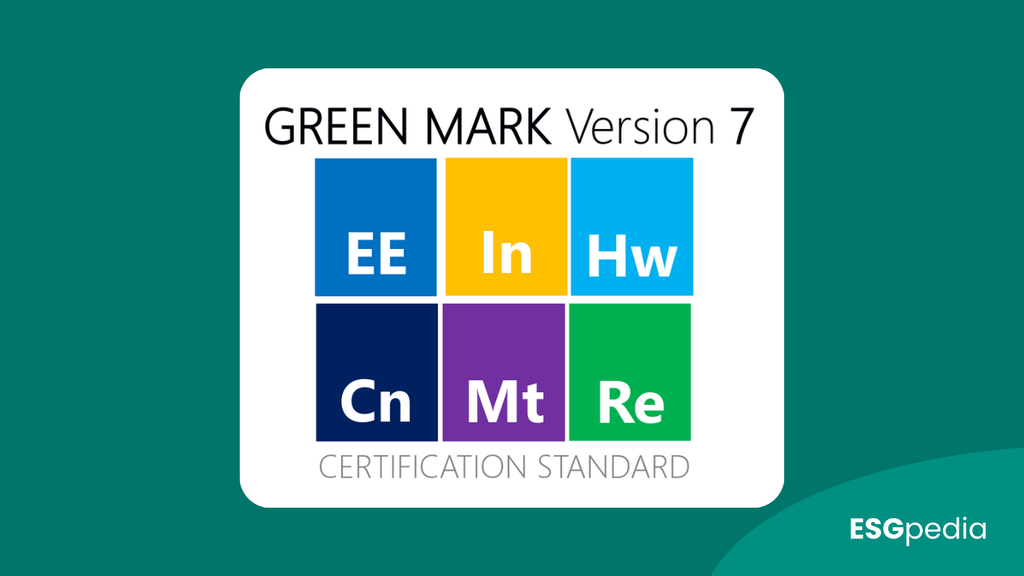
Green Mark v7 (GM v7) is more performance-based and outcome-focused, introducing alternative certification pathways so building owners can pursue energy improvements with a clear return on investment, while strengthening alignment with international standards. It scores buildings across five sustainability sections: Intelligence, Health & Wellbeing, Whole Life Carbon, Resilience, and Maintainability.
Compared with the previous version, GM v7 lowers the reference baseline values, brings substructure embodied carbon into scope, and scores low-carbon steel and concrete more directly. These changes mark a significant step forward in Singapore’s green building journey, providing clearer pathways for decarbonisation and encouraging greater sustainability across the built environment.
Less talked about is the work of proving a building has met the certification requirements, and who has to do it. More and more, that falls to the extensive construction network and supply chain. A building’s Whole Life Carbon score depends on data for every material in it, and most of these data required for GM v7 submission sits with the contractors or suppliers who buy the materials and the manufacturers who make them.
Here is how it typically works. A developer aiming for GM v7 Platinum certification specifies Singapore Green Building Product (SGBP) four-tick-certified concrete in its tender. The main contractor who wins the job sources it, manages the cost, and assembles the evidence – one material among hundreds on the same project.
This is particularly relevant as the market for low-carbon steel and concrete is still maturing. Supply is growing, but remains partly import-dependent, which reflects in pricing. Procurement requirements therefore play an important role in accelerating demand and making the economics work for more firms. Once materials are sourced, data collection begins. Delivery orders, invoices, and PDFs arrive from dozens of subcontractors and suppliers, and consolidating this information into a consistent format has traditionally been a manual exercise.
For manufacturers, EPDs supporting SGBP certification offer an opportunity to showcase their products’ environmental performance and strengthen competitiveness. While preparing EPDs involves carbon data collection, digital tools can help simplify the process.
To do well in GM v7, firms must know how to source low-carbon materials, and demonstrate it with credible, traceable data. In practice, the two are closely linked. Having consistent, well-organised product data is what allows a contractor to compare suppliers meaningfully and allocate a carbon budget where it will have the most impact. This enables more informed procurement decisions while supporting the certification process.
Technology addresses a different part of the challenge – not the cost of low-carbon materials, but the decisions around it. Digital tools like ESGpedia can automatically and intelligently extract material data from invoices and delivery orders and match it to recognised emission factors to assess environmental impact. When subcontractors, contractors, and developers work from a shared record, data is collected and verified once, reducing duplication and keeping the project’s data trail in one place, facilitating credible Whole Life Carbon calculation and streamlining the GM v7 certification process.
Drawing on ESGpedia’s work with more than 200 built environment companies, we have seen construction firms cut Sustainability Report preparation time by up to 60% after adopting digital sustainability tools. Across similar implementations, teams have reported up to 90% effort reduction and 600 man-hours saved on data collection and reporting, freeing teams to focus on the decisions the data was pointing to. With better visibility into multi-tiered construction networks, companies have also cut costs by up to two-thirds through operational improvements.
Manufacturers can take the same approach. In one recent case, Integrated Precast Solutions, a Singapore-based manufacturer of high-performance, low-carbon precast concrete, used this approach when pursuing its SGBP certification for its concrete range. By conducting a Life Cycle Assessment (LCA) with ESGpedia, the company successfully verified and published its Environmental Product Declaration (EPD), completing the end-to-end process from data collection to third-party verification and public registry listing without requiring specialised in-house expertise.
The benefit of establishing ESG metrics and EPDs extends beyond GM v7 certification. ALPS, which handles procurement for Singapore’s public healthcare clusters, already asks vendors whether they can provide product-level carbon footprints. A supplier that has built that data for SGBP can reuse it in the next tender, and the one after.
For firms wondering where to start, the path to GM v7 GoldPLUS or Platinum begins with practical steps that can be taken progressively, building on existing processes and capabilities. Developers can engage their supply chains early, giving contractors and suppliers, particularly SMEs, the lead time needed to build the necessary sustainability capabilities before certification requirements become urgent. Main contractors can agree on a consistent approach to supplier data collection before the first delivery arrives on site. Manufacturers can start with the one or two product lines most likely to be specified into Green Mark projects, and have their EPDs in place well ahead of the next renewal.
The scope of requirements is only widening, and it’s a positive step towards greater sustainability and transparency across the built environment. Right now, GM v7 product-level carbon requirements focus on a handful of materials such as concrete, aluminium, steel, and glass, but a building contains thousands more, from windows to air-conditioning, wiring, and interior finishes. Over the next three to five years, carbon disclosure is expected to become a routine line in project tenders rather than an exception.
Getting these carbon and sustainability data right matters: it can help building projects earn GM v7 points, subject to building type, assessment requirements, and scoring caps. The broader lesson is that traceable product information and credible sustainability planning are becoming practical inputs into building performance, procurement, and certification—not simply reporting exercises.
Low-carbon supply is growing, and much of the industry expects it to become standard within a decade. When that happens, the question will shift from whether firms can source these materials to whether they demonstrate their green construction efforts with credible, traceable data. Under GM v7, developers will prioritise partners who can do both. The firms that build that capability now will be better positioned for the next round of tenders.
Score up to 20 BCA Green Mark v7 points with ESGpedia
Half your Green Mark Platinum points, sorted. The BCA Green Mark v7 (GM v7) is now open for applications. ESGpedia helps you digitally track your embodied carbon, energy, and emissions data all in one platform, from company level down to individual products, including LCAs and EPDs, helping you improve your score across four of five sustainability sections, including:
- Whole Life Carbon (up to 14 – 15 points): ESGpedia’s life cycle and whole life carbon (LCA/WLC) assessments, Environmental Product Declarations (EPDs), and net-zero transition plans help building owners demonstrate embodied carbon reductions and provide evidence for low-carbon materials. This supports criteria CN1, CN2 and CN3.2, plus Innovation points, making Whole Life Carbon the largest single source of points.
- Resilience (up to 3 – 4 points): ESGpedia helps building owners earn points across three Resilience criteria. Its SNZO certification support covers RE2.1a(iii), while climate scenario analysis, paired with climate targets for new buildings or resilience action plans for existing ones, covers RE2.3. Its help on developing a green procurement policy covers RE2.1b(i).
- Health & Wellbeing (up to 1 – 2 points): ESGpedia’s EPDs support low-emission material finishes in achieving SGBP 4-tick certification, earning points under HW1.2.
For firms looking to embark on your GM v7 certification journey, find out more about ESGpedia’s solutions to help built environment companies achieve sustainability excellence with up to 50% EDGE Grant funding support here.
Article contributed by: Mr. Benjamin Soh – Founder and Managing Director, ESGpedia