
If our parks, streets, and public spaces are designed to support healthier lives, what role should our indoor environments play?
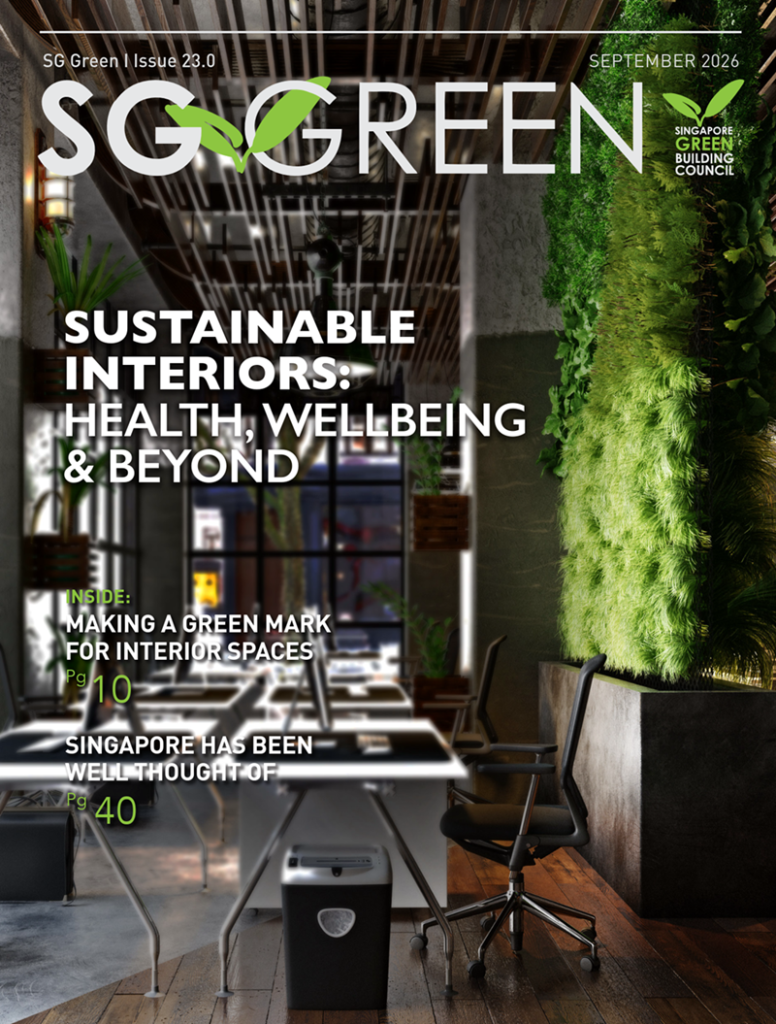
This question informs the latest issue of SG Green. Singapore has shown that a dense city can also be a green city. Today, that ambition is evolving: from reducing environmental impact to creating regenerative spaces that restore ecosystems and support human wellbeing. With the average Singaporean spending more than 90 percent of their time indoors, the interiors we inhabit are active contributors to health, not neutral backdrops.
This issue examines that shift from multiple angles. Our contributors explore how interior design is moving beyond aesthetics toward a deeper purpose: supporting human biology, resilience, and wellbeing. Light, air, sound, temperature, and materials are no longer merely design decisions—they are environmental signals the body responds to, with physiological consequences.
The new Green Mark for Interiors (GMI) certification scheme takes centre stage. Launched for applications in November 2025, it consolidates evaluation criteria across multiple interior space types and represents the next frontier in Singapore’s building sustainability journey. Tenants are responsible for more than 60 percent of total building energy consumption, making interiors a critical lever for achieving Singapore Green Building Masterplan targets.
We hope this issue inspires you to rethink the spaces you create and occupy, whether you are a designer, building owner, tenant, or someone who believes the places we live and work in should support both the planet and the people it sustains.