
Every year, approximately 26 million tonnes of tyres reach end-of-life globally, creating a significant environmental and waste management challenge. Despite ongoing recycling efforts, a substantial proportion of these tyres continues to be landfilled, stockpiled, or incinerated. Meanwhile, the construction sector’s demand for sustainable materials has grown steadily, driven by rapid urbanisation and there is an increasing need for environmentally responsible building solutions.
Recycled Tyre Fibres Rubberised Concrete
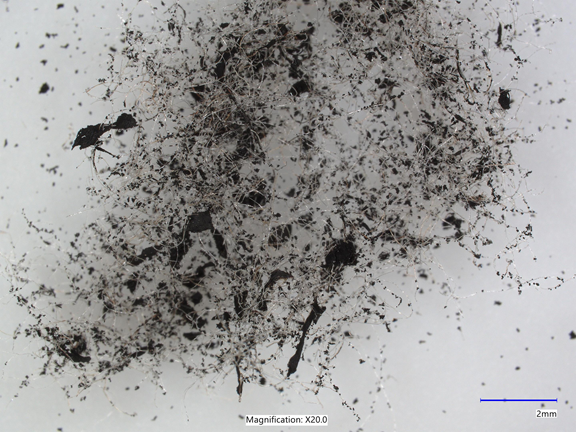
Fibre-reinforced rubberised concrete (FRRuC)—an emerging technology that addresses both challenges simultaneously. This innovative approach utilises recycled tyre polymer microfibre (RTPM), derived from end-of-life tyres, as a replacement for conventional polypropylene (PP) microfibre in non-structural Grade 30 concrete applications. By converting tyre waste into a usable construction material, the technology presents a practical pathway for integrating recycled resources into mainstream building practices.
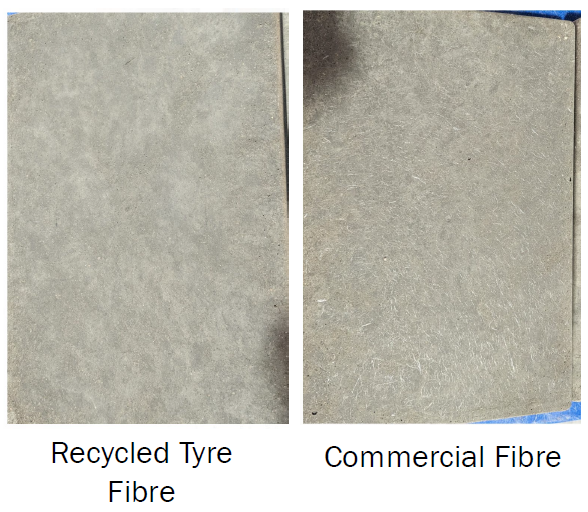
The mix is specifically designed to enhance crack resistance in concrete, particularly in mitigating plastic shrinkage cracks that commonly develop during the early stages of curing. By controlling cracking at micro levels, the technology contributes to improved surface quality and long-term durability. Importantly, the concrete is formulated to maintain key properties such as compressive strength, workability, density, and resistance to water penetration, ensuring it remains suitable for its intended applications, which include but not limited to application on wall, flooring and walkway.
Performance Meets Practical Application
The recycled fibres demonstrate remarkable capabilities across multiple performance metrics. Most notably, they exhibit exceptional crack resistance and remain durable and corrosion-resistant even when used in exposed surface applications. With optimal dosage and batching techniques, fibre ball formation during concrete production—a common issue that compromises mix quality and workability could be reduced.
Beyond technical performance, the technology offers compelling economic benefits reducing the frequency of maintenance due to crack resistance.
Supporting Singapore’s Sustainability Vision
With unwanted impurities being cleaned and processed, the use of recycled tyre microfibres supports more sustainable construction practices by reducing reliance on virgin materials and enabling the reuse of waste resources. By replacing polypropylene fibres—which require energy-intensive production processes—the technology reduces the embodied emissions of concrete formulations without any reduction in concrete properties, such as workability, density, cube compressive strength, or water penetration. This dual benefit of waste valorisation and virgin material substitution aligns perfectly with Singapore’s green building initiatives and circular economy objectives.
The environmental implications extend far beyond waste diversion, demonstrating how innovative thinking can convert environmental challenges into commercial opportunities whilst supporting the transition to more resource-efficient construction practices.
Advancing Towards Commercialisation
To support further development and real-world application, the technology developers are seeking collaboration with Singapore-based companies for joint development and pilot-scale validation. Currently at Technology Readiness Level 4 (TRL 4) positioned for the next crucial phase of development.
Potential partners include ready-mix concrete suppliers, precast manufacturers, construction firms, infrastructure developers, and waste tyre recyclers interested in advancing sustainable construction materials. This collaborative approach will enable comprehensive performance testing in relevant construction environments for application in the area of thermal insulation and impact resistance concrete, bringing the technology closer to widespread commercial adoption.
Transforming Construction’s Future
This innovation reflects a growing shift towards circular construction practices, where waste materials are repurposed into valuable inputs that enhance rather than compromise performance. By transforming discarded tyres into functional concrete additives, it demonstrates how the construction industry can address environmental challenges through material innovation.
As Singapore continues advancing its position as a leader in sustainable urban development, technologies like fibre-reinforced rubberised concrete exemplify the nation’s commitment to combining environmental responsibility with technical excellence.
Article contributed by Singapore Polytechnic, Advanced Materials Technology Centre (AMTC)