As Singapore accelerates towards its net-zero ambitions, an unexpected solution to two pressing environmental challenges is emerging from the laboratories of the Singapore Polytechnic (SP) Advanced Materials Technology Centre (AMTC). This latest innovation transforms spent graphite from decommissioned electric vehicle (EV) batteries into a valuable component for sustainable concrete production, creating a circular economy solution that addresses both growing battery waste and high carbon footprint from the construction industry.
The Looming Battery Waste Challenge
The EV revolution brings an inevitable consequence: a tsunami of lithium-ion battery waste. By 2030, millions of EV batteries will reach end-of-life, creating unprecedented waste management challenges. Within these batteries lies graphite, a critical anode material that conducted electricity throughout the battery’s lifespan. Rather than burdening landfills, SP AMTC has developed groundbreaking technology to give spent graphite a second life in the production of sustainable concrete.
This circular economy approach transforms waste from one industry into raw material for another, simultaneously reducing landfill burden, eliminating disposal costs, and decreasing concrete’s carbon footprint.
Enhanced Performance Beyond Sustainability
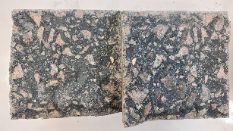
The SP AMTC Sustainable Concrete technology does not merely replace materials – it can also improve concrete performance. Spent graphite, after careful purification to remove excess heavy metals, brings unique properties that traditional raw materials cannot match. Graphite enhances electrical and thermal conductivity whilst contributing to improved durability, opening possibilities for smart infrastructure applications.
To further lower the carbon footprint of concreye, this technology combines spent graphite with Ground Granulated Blast Furnace Slag (GGBS) and manufactured sand (M-sand). GGBS, a by-product from the production of steel, enhances concrete’s long-term strength whilst reducing carbon emissions. Incorporating spent graphite as an additional supplementary cementitious material (SCM) reduces dependence on traditional cement whilst creating new waste valorisation pathways.
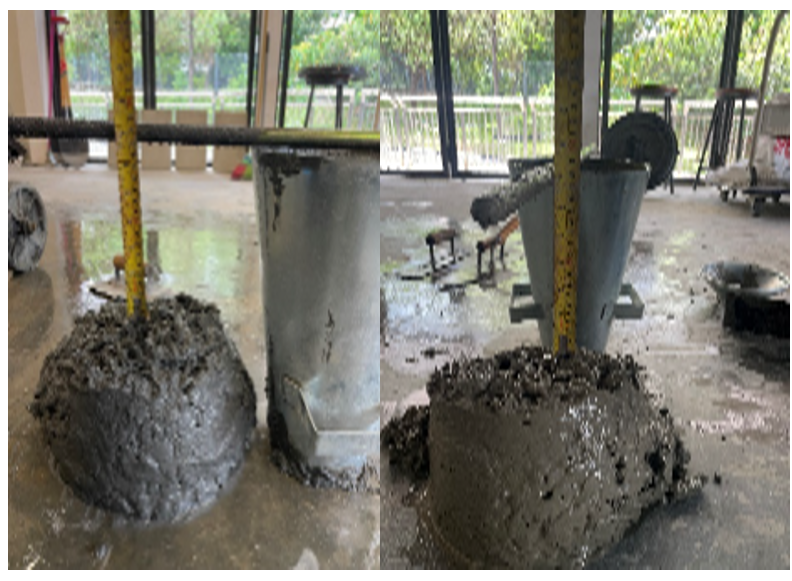
M-sand completes this sustainable trinity by replacing natural river sand, protecting aquatic ecosystems from mining damage. M-sand’s cubical shape and controlled quality improve concretes’ workability and consistency.
Rigorous Validation
Achieving Technology Readiness Level (TRL) of 5, the SP AMTC Sustainable Concrete formulation has successfully passed comprehensive testing by accredited external laboratories, matching or exceeding conventional Grade 40 concrete performance. This milestone represents crucial transition from laboratory proof-of-concept to real-world application, demonstrating guaranteed performance. Testing encompassed mechanical properties and thorough heavy metal contamination analysis, ensuring the Sustainable Concrete meets stringent international industrial safety standards (passed US EPA 1311). In addition, the Sustainable Concrete was tested to meet Singapore’s building standards (SS EN 206, SS 544-1, SS 544-2), demonstrating its versatile application potential.
Industry Transformation Opportunity
The construction industry stands at a crossroads. With concrete production responsible for approximately 8% of global carbon emissions, the sector must embrace innovative solutions to meet climate targets whilst addressing UN Sustainable Development Goals (UN SDGs). The SP AMTC Sustainable Concrete technology offers concrete producers an opportunity to lead transformation by adopting spent graphite as their next sustainable raw material.
Timing is particularly opportune for Singapore, where government commitment to sustainability creates supportive environments for such innovations. As EV adoption accelerates and battery waste volumes grow, establishing spent graphite supply chains within Singapore now positions forward-thinking concrete producers advantageously.
From Innovation to Implementation
Market adoption requires collaboration across industries. Battery recyclers, concrete producers, and construction companies must establish local supply chains and quality standards for commercial implementation. SP AMTC is the bridge across the industries and companies to offer technical expertise and continued research to refine technology for specific applications.
The potential for customisation of Sustainable Concrete becomes apparent as we move towards commercial deployment—tailored formulations optimising specific properties for different construction applications, whether enhanced conductivity for smart buildings or improved thermal performance for energy efficiency.
The future of sustainable construction lies not in choosing between performance and environmental responsibility, but in innovations delivering both. The SP AMTC Sustainable Concrete technology represents exactly this breakthrough—transforming today’s waste into tomorrow’s building blocks whilst creating a more sustainable future for Singapore’s Built Environment.
The question for industry leaders is not whether Sustainable Concrete will become mainstream, but whether they will lead this inevitable transformation. The technology is ready; the environmental imperative is clear; the opportunity is now.