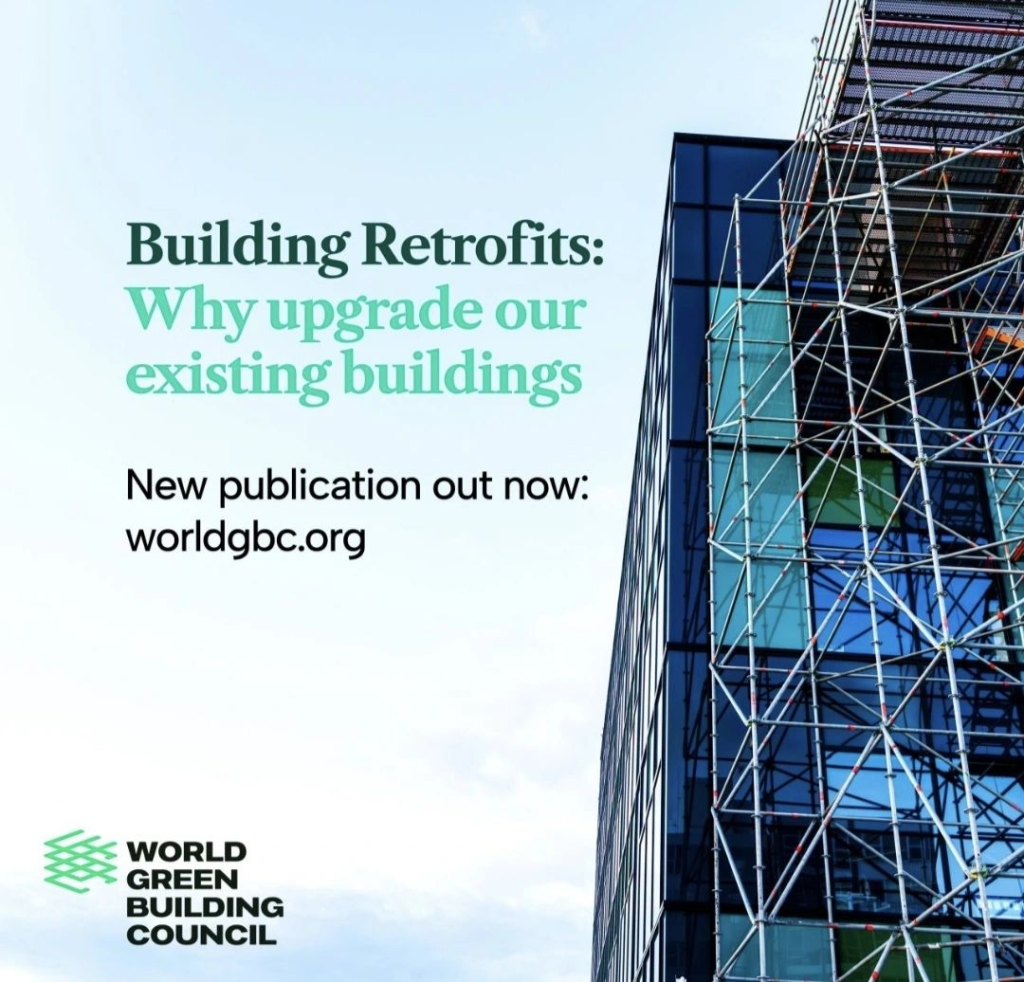
Why upgrade existing buildings instead of replacing them? The answer is clearer than ever.
According to the World Green Building Council, 80% of the buildings that will be standing in 2050 are already here today. That means new construction alone won’t get us to net zero – we must transform what we already have.
A deep retrofit goes beyond minor refurbishments. Deep retrofits upgrade core systems (windows, lighting, insulation, HVAC) to dramatically improve energy performance and cut environmental impact.
The numbers speak for themselves:
- Retrofitting costs up to 40% less than new construction of the same building type.
- Deep retrofits can cut energy and operational emissions by 30–50%, and whole-life carbon by 50–75% compared to new builds.
- Faster project timelines mean upgraded spaces can be brought to market sooner.
Beyond emissions – triple bottom line benefits:
- Economic – Lower utility bills, extended asset lifespan, resilience against climate risks, and reduced chance of becoming uninsurable as energy standards tighten. Retrofits also create more jobs per dollar than new construction.
- Social – Better indoor air quality, temperature stability, and comfort. Reduced risks from damp, overheating, and cold. Plus training and reskilling opportunities that support a just transition to a green economy.
- Environmental – Less demolition waste, lower demand for energy-intensive virgin materials, and preserved heritage features that maintain community identity.
How do we scale retrofits? The new publication highlights three levers:
- Tools – energy audits, benchmarking, certification schemes.
- Policy – minimum energy performance standards, lifecycle assessments, energy labelling.
- Incentives – financial support, streamlined permits, workforce development programmes.
Retrofits aren’t just a climate action – they’re an economic, social, and practical necessity.